When we defined the derivative, we talked about the slope of two points that are very close to one another. In fact, the derivative is defined as:
![\[f'(x)=\lim_{h\to0}\frac{f(x+h)-f(x)}{h}=\lim_{h\to0}\frac{f(x+h)-f(x)}{(x+h)-x}\]](https://mathematics.lu/wp-content/ql-cache/quicklatex.com-569be8daa02c2def5a2db7222355cdef_l3.png "Rendered by QuickLaTeX.com")
This is the slope of the line created by the two points
 and
and  . As
. As  tends to 0, the two points are closer and closer to one another so that the line connecting them becomes a tangent line.
 Typically, for a line we are required to have two points. To find a line tangent to a function at a point
 , all we need is the point, the formula for
  and the first derivative.
Finding the Tangent Line
Given a function  , we know that the first derivative
  and the tangent line are connected. In reality, given any point in the domain of , the value:
  is the slope of the line tangent to the graph of at the point .
More formally:
Definition (The Tangent Line): Let be a function that is differentiable at a point  . The equation of the line tangent to the graph of at the point is:
![\[y - \underbrace{y_0}_{f(x_0)}= f'(x_0) \cdot (x - x_0)\]](https://mathematics.lu/wp-content/ql-cache/quicklatex.com-01f18c8887271152e39f05cce85ed4fd_l3.png "Rendered by QuickLaTeX.com")
- Geometric Meaning: It is the linear approximation of the curve at that specific location, matching the direction of the graph so that it looks identical to the curve when zoomed in tightly.
- Linearization Form: Can be rearranged into function format as
 .
.
That is, given and we follow these steps to find the tangent line:
- Determine .
- Calculate and
 .
. - Replace in the equation above.
Example: Find the equation of the tangent line to the function  at the point where
  .
.
![\[f(2) = 2(2)^2 - 3(2) + 1 = 2(4) - 6 + 1 = 8 - 6 + 1 = 3\]](https://mathematics.lu/wp-content/ql-cache/quicklatex.com-cf1f9d48ebfa3d48a7aec40cc4bb190e_l3.png "Rendered by QuickLaTeX.com")
 .
.![\[f'(x) = \frac{\mathrm{d}}{\mathrm{d}x}(2x^2 - 3x + 1) = 4x - 3\]](https://mathematics.lu/wp-content/ql-cache/quicklatex.com-60649fdfda77ae8941894d1267acf401_l3.png "Rendered by QuickLaTeX.com")
 :
:![\[f'(2) = 4(2) - 3 = 8 - 3 = 5\]](https://mathematics.lu/wp-content/ql-cache/quicklatex.com-55418d9e2683ce3dbdf76d2eaa6014f7_l3.png "Rendered by QuickLaTeX.com")
 into the formula:
![\[y - f(x_0) = f'(x_0) \cdot (x - x_0)\]](https://mathematics.lu/wp-content/ql-cache/quicklatex.com-a7767ce0b7c6d725e23a8a8c0cd99f25_l3.png "Rendered by QuickLaTeX.com")
![\[y - f(2) = f'(2) \cdot (x - 2)\]](https://mathematics.lu/wp-content/ql-cache/quicklatex.com-f1ecfebecca92e3783dec775019e046c_l3.png "Rendered by QuickLaTeX.com")
![\[y - 3 = 5(x - 2)\]](https://mathematics.lu/wp-content/ql-cache/quicklatex.com-15e6ad540cea3547faf1e8e198ec83b5_l3.png "Rendered by QuickLaTeX.com")
 to convert the equation into slope-intercept form (
![\[y - 3 = 5x - 10 \implies y = 5x - 7\]](https://mathematics.lu/wp-content/ql-cache/quicklatex.com-a74aea038c5ee56e816935aca550111c_l3.png "Rendered by QuickLaTeX.com")
 is
is  .
.Example: Find the equation of the tangent line to the function  at the point where
  .
.
 :
:![\[f(1) = 4\ln(1) + 1 = 4(0) + 1 = 1\]](https://mathematics.lu/wp-content/ql-cache/quicklatex.com-dccd2d3967bad8f4afcbfa3155bb5af3_l3.png "Rendered by QuickLaTeX.com")
 .
.![\[f'(x) = 4\left(\frac{1}{x}\right) + 1 = \frac{4}{x} + 1\]](https://mathematics.lu/wp-content/ql-cache/quicklatex.com-a951dfc0d36aabd6571e7553a6b3443b_l3.png "Rendered by QuickLaTeX.com")
 :
:![\[f'(1) = \frac{4}{1} + 1 = 4 + 1 = 5\]](https://mathematics.lu/wp-content/ql-cache/quicklatex.com-aafea751b5251f24f95b459a21522d5e_l3.png "Rendered by QuickLaTeX.com")
 .
. into the formula:
![\[y - 1 = 5(x - 1)\]](https://mathematics.lu/wp-content/ql-cache/quicklatex.com-771da7e754716bc9cd0173927a48a6ff_l3.png "Rendered by QuickLaTeX.com")
 ):
):![\[y - 1 = 5x - 5 \implies y = 5x - 4\]](https://mathematics.lu/wp-content/ql-cache/quicklatex.com-d11c782c2b110200dec89de1c7cdb9c4_l3.png "Rendered by QuickLaTeX.com")
 is
is  .
.Problem Solving with Tangent Lines
Using the formula above, we can be given a similar problem disguised differently. For the exercises below, you should remember the following two facts:
- Two lines are parallel if they have the same slope.
- Two lines are parallel if the product of their slopes is
 , i.e.:
  .
.
Example: Consider the quadratic function  , where
  is an unknown constant parameter. Given that the tangent line to the graph of at the point where is parallel to the line
  , find the value of .
![\[y = 14x + 3 \implies \text{Slope } (m) = 14\]](https://mathematics.lu/wp-content/ql-cache/quicklatex.com-116cce3d03ab774f7ab26e2ee2549595_l3.png "Rendered by QuickLaTeX.com")
 , which means
  .
.![\[f'(x) = \frac{\mathrm{d}}{\mathrm{d}x}(3x^2 + bx - 5)\]](https://mathematics.lu/wp-content/ql-cache/quicklatex.com-fa709c547355aea47c962a5983aca00b_l3.png "Rendered by QuickLaTeX.com")
![\[f'(x) = 6x + b\]](https://mathematics.lu/wp-content/ql-cache/quicklatex.com-bb0e20990282102bff421d43fd228354_l3.png "Rendered by QuickLaTeX.com")
![\[f'(2) = 6(2) + b = 14\]](https://mathematics.lu/wp-content/ql-cache/quicklatex.com-2bd9b4172ec74ad7af594c83df17f45c_l3.png "Rendered by QuickLaTeX.com")
![\[12 + b = 14\]](https://mathematics.lu/wp-content/ql-cache/quicklatex.com-7bec67e4e0e8efd9eb707b15ee207436_l3.png "Rendered by QuickLaTeX.com")
![\[b = 14 - 12 \implies b = 2\]](https://mathematics.lu/wp-content/ql-cache/quicklatex.com-f980cd7f651c9589b9417659c1d49027_l3.png "Rendered by QuickLaTeX.com")
 , making the complete quadratic function
  .
.Example: Consider the quadratic function  , where
  is an unknown constant parameter. Given that the tangent line to the graph of at the point where is perpendicular to the line
  , find the value of .
 ). The given line is in slope-intercept form (
![\[y = \frac{1}{2}x - 9 \implies \text{Reference Slope } (m_1) = \frac{1}{2}\]](https://mathematics.lu/wp-content/ql-cache/quicklatex.com-b8be9bae1d55bc06ee2ab060d0b4c6c9_l3.png "Rendered by QuickLaTeX.com")
 ):
):![\[m_2 = -\frac{1}{m_1} = -\frac{1}{\frac{1}{2}} = -2\]](https://mathematics.lu/wp-content/ql-cache/quicklatex.com-1aa17a8a17ab1a2b0ae8623447ab7ec1_l3.png "Rendered by QuickLaTeX.com")
 , which means
  .
.![\[f'(x) = \frac{\mathrm{d}}{\mathrm{d}x}(ax^2 - 4x + 7)\]](https://mathematics.lu/wp-content/ql-cache/quicklatex.com-6ab6cf0b2e16be225d2a1e78e22de67b_l3.png "Rendered by QuickLaTeX.com")
![\[f'(x) = 2ax - 4\]](https://mathematics.lu/wp-content/ql-cache/quicklatex.com-8a47548973304a3a61f150d7c9c2c8ec_l3.png "Rendered by QuickLaTeX.com")
![\[f'(1) = 2a(1) - 4 = -2\]](https://mathematics.lu/wp-content/ql-cache/quicklatex.com-effb97200d15f9eac867bef6d5dffa3a_l3.png "Rendered by QuickLaTeX.com")
![\[2a - 4 = -2\]](https://mathematics.lu/wp-content/ql-cache/quicklatex.com-b19aa0ac7685098e6725cdba66e3d36c_l3.png "Rendered by QuickLaTeX.com")
![\[2a = -2 + 4\]](https://mathematics.lu/wp-content/ql-cache/quicklatex.com-dceb6922c49c6d75bf5555a23dac51a9_l3.png "Rendered by QuickLaTeX.com")
![\[2a = 2 \implies a = 1\]](https://mathematics.lu/wp-content/ql-cache/quicklatex.com-d5fb243cb69374967c61093d04dcaf3f_l3.png "Rendered by QuickLaTeX.com")
 , making the complete quadratic function
  .
.Similarly, we can be given the same hint in a different way:
Example: Consider the function  , where
  is an unknown constant parameter. Given that the tangent line to the graph of at the point where is parallel to the -axis, find the value of .
 . Because parallel lines share identical slopes, any line parallel to the
 ![\[\text{Tangent is parallel to the } x\text{-axis} \implies f'(x_0) = 0 \implies f'(2) = 0\]](https://mathematics.lu/wp-content/ql-cache/quicklatex.com-04cdb601e7f11d592a6cd0b2e60880c7_l3.png "Rendered by QuickLaTeX.com")
![\[f'(x) = \frac{\mathrm{d}}{\mathrm{d}x}(x^3 + kx^2 - 12x + 5)\]](https://mathematics.lu/wp-content/ql-cache/quicklatex.com-ef317d60b19f9ca9eab9a9c8546b1163_l3.png "Rendered by QuickLaTeX.com")
![\[f'(x) = 3x^2 + 2kx - 12\]](https://mathematics.lu/wp-content/ql-cache/quicklatex.com-2bd8f9638b0f2c79e473d918d26a7788_l3.png "Rendered by QuickLaTeX.com")
![\[f'(2) = 3(2)^2 + 2k(2) - 12 = 0\]](https://mathematics.lu/wp-content/ql-cache/quicklatex.com-f17bba25a360c895bcfda89e76da9ffe_l3.png "Rendered by QuickLaTeX.com")
![\[3(4) + 4k - 12 = 0\]](https://mathematics.lu/wp-content/ql-cache/quicklatex.com-58ede0322a3e663046d03cacfd785590_l3.png "Rendered by QuickLaTeX.com")
![\[12 + 4k - 12 = 0\]](https://mathematics.lu/wp-content/ql-cache/quicklatex.com-7612c8d8ca02081b474a6223c47fc45b_l3.png "Rendered by QuickLaTeX.com")
![\[4k = 0 \implies k = 0\]](https://mathematics.lu/wp-content/ql-cache/quicklatex.com-319a9ca128a5735b774d753b36bf8776_l3.png "Rendered by QuickLaTeX.com")
 , which simplifies our baseline cubic function to
  . This confirms that
 Each parameter missing is one piece of information that we need to be given to find it. In the next example, two parameters will be left to calculate, so we will be given two pieces of information and we can create a system of equations from this.
Example: Consider the cubic function  , where and are unknown constant parameters. Given that the curve passes through the point
  and has a stationary point at this exact location, determine the values of and .
 :
:
![\[f(1) = 2 \quad \text{(Equation 1)}\]](https://mathematics.lu/wp-content/ql-cache/quicklatex.com-f6cfbe38cb84fe7d5c0ef7ca8eac4acd_l3.png "Rendered by QuickLaTeX.com")
![\[f'(1) = 0 \quad \text{(Equation 2)}\]](https://mathematics.lu/wp-content/ql-cache/quicklatex.com-2a1fa8ac054f26dcef8c1f2b534d5c96_l3.png "Rendered by QuickLaTeX.com")
![\[a(1)^3 + b(1)^2 - 7(1) + 4 = 2\]](https://mathematics.lu/wp-content/ql-cache/quicklatex.com-766f239c9e9248391e6f550cb39e8350_l3.png "Rendered by QuickLaTeX.com")
![\[a + b - 7 + 4 = 2\]](https://mathematics.lu/wp-content/ql-cache/quicklatex.com-af30873213a2c290767b4f8e8ce700f6_l3.png "Rendered by QuickLaTeX.com")
![\[a + b - 3 = 2 \implies a + b = 5 \quad \text{(Eq. 1)}\]](https://mathematics.lu/wp-content/ql-cache/quicklatex.com-1af51f0e247e5b63db7a78ced02c0596_l3.png "Rendered by QuickLaTeX.com")
![\[f'(x) = 3ax^2 + 2bx - 7\]](https://mathematics.lu/wp-content/ql-cache/quicklatex.com-afae491de808766a6ffbd92d7949b310_l3.png "Rendered by QuickLaTeX.com")
![\[f'(1) = 3a(1)^2 + 2b(1) - 7 = 0\]](https://mathematics.lu/wp-content/ql-cache/quicklatex.com-080fc5db9e1aa51c54a9b4e78c2063a6_l3.png "Rendered by QuickLaTeX.com")
![\[3a + 2b - 7 = 0 \implies 3a + 2b = 7 \quad \text{(Eq. 2)}\]](https://mathematics.lu/wp-content/ql-cache/quicklatex.com-d379a13726b84fd08a92c4f090a8f815_l3.png "Rendered by QuickLaTeX.com")
![\[\begin{cases} a + b = 5 & \text{(1)} \\ 3a + 2b = 7 & \text{(2)} \end{cases}\]](https://mathematics.lu/wp-content/ql-cache/quicklatex.com-36e20b4ab7db58574e383e67bcc75235_l3.png "Rendered by QuickLaTeX.com")
 , and substitute it into the second equation:
![\[3a + 2(5 - a) = 7\]](https://mathematics.lu/wp-content/ql-cache/quicklatex.com-e885088bb57285d8d80b06baf9d1c6cc_l3.png "Rendered by QuickLaTeX.com")
![\[3a + 10 - 2a = 7\]](https://mathematics.lu/wp-content/ql-cache/quicklatex.com-11d37014dc3e1f163f82e537fa9bb99d_l3.png "Rendered by QuickLaTeX.com")
![\[a + 10 = 7 \implies a = -3\]](https://mathematics.lu/wp-content/ql-cache/quicklatex.com-029d99a5784a4ebe99efa56d812d2fc1_l3.png "Rendered by QuickLaTeX.com")
 back into our isolation expression to locate
 ![\[b = 5 - (-3) = 5 + 3 \implies b = 8\]](https://mathematics.lu/wp-content/ql-cache/quicklatex.com-26b646fb490a039afbfad629d50274d9_l3.png "Rendered by QuickLaTeX.com")
 , making the complete cubic function profile
  .
.Exercises
For each of the following functions, find the equation of the tangent line at the given point . State your final answer in slope-intercept form ( ).
).





For each of the following, use your knowledge of derivatives, tangent lines, and parallel or perpendicular linear to calculate the value of the unknown parameter (, , or ).
 . Find the value of if the tangent line at
  is parallel to the line
  .
.
 . Find the value of if the tangent line at
  is parallel to the line
  .
.
 . Find the value of if the tangent line at is perpendicular to the line
 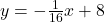 .
.
 . Find the value of if the tangent line at is perpendicular to the line
  .
.
 for
for  . Find the value of if the tangent line at is parallel to the line
  .
.
 . Find the value of if the tangent line at
  is perpendicular to the line
 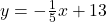 .
.
 , where is an unknown constant parameter. Given that the tangent line to the graph of at the point where is parallel to the -axis, determine the required value of and state the coordinates of this stationary point.
 , where and are unknown constant parameters. Given that the curve passes through the coordinate point
  and possesses a stationary point at this exact location, construct a system of simultaneous linear equations to determine the precise values of and .