In this page, we develop the remaining rules to find derivatives. Towards the end, we make a summary to have all the rules together and this will enable us to find any derivative by referring to these rules carefully.
We saw that give two functions  and
and  , the derivative of their sum
  is the same as the sum of the derivatives
  . We would expect the product and quotient to be the same, but this is not the case. Remember that the derivative is defined as a limit:
![\[f'(x)=\lim_{h\to0}\frac{f(x+h)-f(x)}{h}\]](https://mathematics.lu/wp-content/ql-cache/quicklatex.com-876bea5d0ad9ee9b968414e6896f312d_l3.png "Rendered by QuickLaTeX.com")
If we want to find the derivative of
 , then we would have
  and not
  . This already creates a big difference in the definition of our derivative, so we need new rules for product, quotient, and composition of functions.
Product Rule
Claim (The Product Rule): If  and
and  are both differentiable real-valued functions, then the derivative of their product function is equal to the derivative of the first function multiplied by the second function plus the first function multiplied by the derivative of the second function.
![\[(f(x) \cdot g(x))' = f'(x)g(x) + f(x)g'(x)\]](https://mathematics.lu/wp-content/ql-cache/quicklatex.com-6f244daf6852ab4bfbd10dee7f40b9c8_l3.png "Rendered by QuickLaTeX.com")
 and write out its limit definition from first principles:
![\[P'(x) = \lim_{h \to 0} \frac{f(x + h)g(x + h) - f(x)g(x)}{h}\]](https://mathematics.lu/wp-content/ql-cache/quicklatex.com-2611376dcf248166ae2cdff6a474e992_l3.png "Rendered by QuickLaTeX.com")
 directly into the center of the numerator to permit grouping:
![\[P'(x) = \lim_{h \to 0} \frac{f(x + h)g(x + h) - f(x)g(x + h) + f(x)g(x + h) - f(x)g(x)}{h}\]](https://mathematics.lu/wp-content/ql-cache/quicklatex.com-13465d943144ece719821a373f9ef58a_l3.png "Rendered by QuickLaTeX.com")
![\[P'(x) = \lim_{h \to 0} \left[ \left(\frac{f(x + h) - f(x)}{h}\right) \cdot g(x + h) + f(x) \cdot \left(\frac{g(x + h) - g(x)}{h}\right) \right]\]](https://mathematics.lu/wp-content/ql-cache/quicklatex.com-0424ee536b2a4f888f768fb1d6205cf9_l3.png "Rendered by QuickLaTeX.com")
 . Applying limit laws yields:
![\[P'(x) = \left(\lim_{h \to 0} \frac{f(x + h) - f(x)}{h}\right) \cdot \left(\lim_{h \to 0} g(x + h)\right) + f(x) \cdot \left(\lim_{h \to 0} \frac{g(x + h) - g(x)}{h}\right)\]](https://mathematics.lu/wp-content/ql-cache/quicklatex.com-37c378928795aa14a6bfde9f80eef86f_l3.png "Rendered by QuickLaTeX.com")
![\[P'(x) = f'(x)g(x) + f(x)g'(x)\]](https://mathematics.lu/wp-content/ql-cache/quicklatex.com-b2df7ca665fe31b12a356385e0efdac5_l3.png "Rendered by QuickLaTeX.com")
Let us see how we use this rule with a simple example:
Example: Use the product rule to determine the derivative of the function  .
.
![\[f(x) = x^3 \implies f'(x) = 3x^2\]](https://mathematics.lu/wp-content/ql-cache/quicklatex.com-1a57b458ae2166c4237261d9b654936e_l3.png "Rendered by QuickLaTeX.com")
![\[g(x) = \sin(x) \implies g'(x) = \cos(x)\]](https://mathematics.lu/wp-content/ql-cache/quicklatex.com-5d2e9c2b8f945b2af280a0d169154702_l3.png "Rendered by QuickLaTeX.com")
![\[y' = f'(x)g(x) + f(x)g'(x)\]](https://mathematics.lu/wp-content/ql-cache/quicklatex.com-8d8bf5720d173a86afa13974d00e7356_l3.png "Rendered by QuickLaTeX.com")
![\[y' = (3x^2) \cdot \sin(x) + (x^3) \cdot \cos(x)\]](https://mathematics.lu/wp-content/ql-cache/quicklatex.com-4ff2883d355cd07e12eb2081ffbf3976_l3.png "Rendered by QuickLaTeX.com")
![\[\frac{\mathrm{d}y}{\mathrm{d}x} = 3x^2\sin(x) + x^3\cos(x)\]](https://mathematics.lu/wp-content/ql-cache/quicklatex.com-ac19520f02e55ae5695c650e85538426_l3.png "Rendered by QuickLaTeX.com")
Before we move on, one final example showing the product of three functions, and using the product rule twice:
Example: Determine the derivative of the triple product function  by applying the standard product rule twice sequentially.
![y = [x^2 e^x] \cdot \sin(x)](https://mathematics.lu/wp-content/ql-cache/quicklatex.com-9de97435475131b2e82a01d82cafc11c_l3.png "Rendered by QuickLaTeX.com") . Treating
. Treating ![[x^2 e^x]](https://mathematics.lu/wp-content/ql-cache/quicklatex.com-d7c1a1c63086ae0779162652f30e246f_l3.png "Rendered by QuickLaTeX.com") as the first function and
as the first function and  as the second, apply the standard product rule
 ![\[y' = [x^2 e^x]' \cdot \sin(x) + [x^2 e^x] \cdot (\sin(x))'\]](https://mathematics.lu/wp-content/ql-cache/quicklatex.com-fc6bc06a19c079d55cef141711ac79f7_l3.png "Rendered by QuickLaTeX.com")
![\[y' = [x^2 e^x]' \cdot \sin(x) + x^2 e^x \cos(x)\]](https://mathematics.lu/wp-content/ql-cache/quicklatex.com-808cdfb013b2a9a033a7a18f53a3a58a_l3.png "Rendered by QuickLaTeX.com")
![[x^2 e^x]'](https://mathematics.lu/wp-content/ql-cache/quicklatex.com-8a8bb7208283e9501d321b06e6ed3842_l3.png "Rendered by QuickLaTeX.com") inside the brackets by using the standard product rule on its individual factors:
inside the brackets by using the standard product rule on its individual factors:![\[[x^2 e^x]' = (x^2)' \cdot e^x + x^2 \cdot (e^x)' = 2x e^x + x^2 e^x\]](https://mathematics.lu/wp-content/ql-cache/quicklatex.com-fd6a2ca64d5b44742b4b790dfe24e164_l3.png "Rendered by QuickLaTeX.com")
![\[y' = (2x e^x + x^2 e^x) \cdot \sin(x) + x^2 e^x \cos(x)\]](https://mathematics.lu/wp-content/ql-cache/quicklatex.com-de930e43155a425af27a333724e8be13_l3.png "Rendered by QuickLaTeX.com")
![\[y' = 2x e^x \sin(x) + x^2 e^x \sin(x) + x^2 e^x \cos(x)\]](https://mathematics.lu/wp-content/ql-cache/quicklatex.com-0d2774cff90b7a73dce4761c31ed13b9_l3.png "Rendered by QuickLaTeX.com")
![\[y' = x e^x [2\sin(x) + x\sin(x) + x\cos(x)]\]](https://mathematics.lu/wp-content/ql-cache/quicklatex.com-0a794746f9824125d9edbacb0ccda724_l3.png "Rendered by QuickLaTeX.com")
![\[\frac{\mathrm{d}y}{\mathrm{d}x} = x e^x [2\sin(x) + x\sin(x) + x\cos(x)]\]](https://mathematics.lu/wp-content/ql-cache/quicklatex.com-57bebd8d9f62f2aa2c589018bab88b5f_l3.png "Rendered by QuickLaTeX.com")
A general “product rule” with three functions  and
and  would be:
![\[\Big(f(x)\cdot g(x)\cdot h(x)\Big)'=f'(x)\cdot (g(x)\cdot h(x))+g'(x)\cdot (f(x)\cdot h(x))+h'(x)\cdot(g(x)\cdot f(x))\]](https://mathematics.lu/wp-content/ql-cache/quicklatex.com-c0a6c370cbf4301e43271733cc5a2638_l3.png "Rendered by QuickLaTeX.com")
Quotient Rule
Like the product rule, the quotient rule has its own formula, and is simply a matter of copy-pasting the elements into your formula and working in steps.
Claim (The Quotient Rule): If and are both differentiable functions and  , then the derivative of their quotient function is given by:
![\[\left(\frac{f(x)}{g(x)}\right)' = \frac{f'(x)g(x) - f(x)g'(x)}{[g(x)]^2}\]](https://mathematics.lu/wp-content/ql-cache/quicklatex.com-46146e970c46b8e15a8e11de7c0a4aa3_l3.png "Rendered by QuickLaTeX.com")
 and write out its limit definition from first principles:
![\[Q'(x) = \lim_{h \to 0} \frac{\frac{f(x + h)}{g(x + h)} - \frac{f(x)}{g(x)}}{h}\]](https://mathematics.lu/wp-content/ql-cache/quicklatex.com-8ed560ad0fc57e5e44b74e1f5dac6d64_l3.png "Rendered by QuickLaTeX.com")
![\[Q'(x) = \lim_{h \to 0} \frac{1}{h} \cdot \left[ \frac{f(x + h)g(x) - f(x)g(x + h)}{g(x + h)g(x)} \right]\]](https://mathematics.lu/wp-content/ql-cache/quicklatex.com-43eb7559c48a2ece6f94d45930551c3d_l3.png "Rendered by QuickLaTeX.com")

 into the center of the numerator to permit grouping:
![\[Q'(x) = \lim_{h \to 0} \frac{f(x + h)g(x) - f(x)g(x) + f(x)g(x) - f(x)g(x + h)}{h \cdot g(x + h)g(x)}\]](https://mathematics.lu/wp-content/ql-cache/quicklatex.com-c354e932a82517fb479615c68ac68975_l3.png "Rendered by QuickLaTeX.com")
![\[Q'(x) = \lim_{h \to 0} \left[ \frac{\left(\frac{f(x + h) - f(x)}{h}\right)g(x) - f(x)\left(\frac{g(x + h) - g(x)}{h}\right)}{g(x + h)g(x)} \right]\]](https://mathematics.lu/wp-content/ql-cache/quicklatex.com-10790f4ab70080a54d8580c69fe08444_l3.png "Rendered by QuickLaTeX.com")
 . Moreover, the expressions
  and
and  correspond to
  by definition. Using the limit laws and the continuity property
 ![\[Q'(x) = \frac{f'(x)g(x) - f(x)g'(x)}{[g(x)]^2}\]](https://mathematics.lu/wp-content/ql-cache/quicklatex.com-be3a8269c36a9a30b94e2ab3d1e12010_l3.png "Rendered by QuickLaTeX.com")
Example: Use the quotient rule to determine the derivative of the function 
![\[y' = \frac{f'(x)g(x) - f(x)g'(x)}{[g(x)]^2}\]](https://mathematics.lu/wp-content/ql-cache/quicklatex.com-0a8a4a1beda2684d79c02fce543fceb9_l3.png "Rendered by QuickLaTeX.com")
![\[y' = \frac{(3x^2) \cdot \sin(x) - (x^3) \cdot \cos(x)}{[\sin(x)]^2}\]](https://mathematics.lu/wp-content/ql-cache/quicklatex.com-54222772487c949523ea9af275982675_l3.png "Rendered by QuickLaTeX.com")
![\[\frac{\mathrm{d}y}{\mathrm{d}x} = \frac{3x^2\sin(x) - x^3\cos(x)}{\sin^2(x)}\]](https://mathematics.lu/wp-content/ql-cache/quicklatex.com-6b83dd41b8dc87cd37b47e662d31f327_l3.png "Rendered by QuickLaTeX.com")
Chain Rule
From experience, this is the rule that students struggle with the most. The idea is the following: we know how to find the derivative of  , for example. But how do we find the derivative of
  ? Here, the exponent is not simply
  , but some function . This is an example of a composition of functions. The chain rule tells us to differentiate the outer function “as if were just an ,” and then compensate for the fact that itself depends on by multiplying the result by
  .
.
Claim (The Chain Rule): If is a differentiable function at and  is a differentiable function at
  , then the composite function
  is differentiable at , and its derivative is equal to the derivative of the outer function evaluated at the inner function multiplied by the derivative of the inner function.
![\[\frac{\mathrm{d}}{\mathrm{d}x}[f(g(x))] = f'(g(x)) \cdot g'(x)\]](https://mathematics.lu/wp-content/ql-cache/quicklatex.com-40ce5434071fd33b1dd99bbcd0e9fb53_l3.png "Rendered by QuickLaTeX.com")
 produce increments
  in
in  and
and  in
in  . Setting up the difference quotient yields:
![\[\frac{\Delta y}{\Delta x} = \frac{\Delta y}{\Delta u} \cdot \frac{\Delta u}{\Delta x}\]](https://mathematics.lu/wp-content/ql-cache/quicklatex.com-14cc5051ddddff232e0c6e6c03dd1c55_l3.png "Rendered by QuickLaTeX.com")
 forces
  due to the continuity of
 ![\[\frac{\mathrm{d}y}{\mathrm{d}x} = \left(\lim_{\Delta u \to 0} \frac{\Delta y}{\Delta u}\right) \cdot \left(\lim_{\Delta x \to 0} \frac{\Delta u}{\Delta x}\right) = \frac{\mathrm{d}y}{\mathrm{d}u} \cdot \frac{\mathrm{d}u}{\mathrm{d}x} = f'(g(x)) \cdot g'(x)\]](https://mathematics.lu/wp-content/ql-cache/quicklatex.com-b4b6270c00e5a069ba481bd5f414320b_l3.png "Rendered by QuickLaTeX.com")
There is no need to understand the proof above. It is not entirely formal, but it is a neat trick that treats derivatives somewhat like fractions and takes advantage of the notation  . While is not literally a fraction in the usual sense, this way of thinking provides useful intuition for the chain rule.
Example: Use the chain rule to determine the derivative of the composite function  .
.
![\[\text{Outer: } f(u) = \sin(u) \implies f'(u) = \cos(u)\]](https://mathematics.lu/wp-content/ql-cache/quicklatex.com-b8d70a313df3f96541d5d0bc537834a0_l3.png "Rendered by QuickLaTeX.com")
![\[\text{Inner: } u = g(x) = x^3 + 5x \implies g'(x) = 3x^2 + 5\]](https://mathematics.lu/wp-content/ql-cache/quicklatex.com-2fb784f247b2a9fa5144e535482c1db9_l3.png "Rendered by QuickLaTeX.com")
![\[y' = f'(g(x)) \cdot g'(x)\]](https://mathematics.lu/wp-content/ql-cache/quicklatex.com-fce651913d676f36560ca1ca8eb09858_l3.png "Rendered by QuickLaTeX.com")
![\[y' = \cos(x^3 + 5x) \cdot (3x^2 + 5)\]](https://mathematics.lu/wp-content/ql-cache/quicklatex.com-676b155285dad850806ed44aaf0daf39_l3.png "Rendered by QuickLaTeX.com")
![\[\frac{\mathrm{d}y}{\mathrm{d}x} = (3x^2 + 5)\cos(x^3 + 5x)\]](https://mathematics.lu/wp-content/ql-cache/quicklatex.com-6f013ed22604010b81073ff5b654c095_l3.png "Rendered by QuickLaTeX.com")
The next example is meant mostly to cover harder situations and show that as long as you work in terms, you can use the chain rule to find any derivative.
Example: Use the chain rule twice to determine the derivative of the triple composite function  .
.



![\[y' = \frac{1}{\sin(x^2 + 1)} \cdot [\sin(x^2 + 1)]'\]](https://mathematics.lu/wp-content/ql-cache/quicklatex.com-5191972c3d985065abe9fb0b136c6e0b_l3.png "Rendered by QuickLaTeX.com")
![\[[\sin(x^2 + 1)]' = \cos(x^2 + 1) \cdot [x^2 + 1]'\]](https://mathematics.lu/wp-content/ql-cache/quicklatex.com-ffd22584bfda158b867e92c725f65397_l3.png "Rendered by QuickLaTeX.com")
![\[[\sin(x^2 + 1)]' = \cos(x^2 + 1) \cdot (2x)\]](https://mathematics.lu/wp-content/ql-cache/quicklatex.com-28c9d720c31fef363c613c1eb1cc407b_l3.png "Rendered by QuickLaTeX.com")
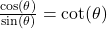 ):
):![\[y' = \frac{1}{\sin(x^2 + 1)} \cdot \cos(x^2 + 1) \cdot 2x\]](https://mathematics.lu/wp-content/ql-cache/quicklatex.com-0bd1ed6b59e00c085cd02c9e7eb2d499_l3.png "Rendered by QuickLaTeX.com")
![\[\frac{\mathrm{d}y}{\mathrm{d}x} = 2x \cdot \frac{\cos(x^2 + 1)}{\sin(x^2 + 1)}\]](https://mathematics.lu/wp-content/ql-cache/quicklatex.com-40599c875fabb2911e077ab14927614b_l3.png "Rendered by QuickLaTeX.com")
Summary
Combining the claims above with the ones from yesterday, here are all the rules necessary to find derivatives.
Claim (Summary of Fundamental Differentiation Rules): Let and be differentiable real-valued functions, and let  be any constant scaling parameter. The core structural operations of calculus satisfy the following five analytical rules:
- 1. Sum and Difference Rule:
![\[(f(x) \pm g(x))' = f'(x) \pm g'(x)\]](https://mathematics.lu/wp-content/ql-cache/quicklatex.com-0d8c9d079e0805afeaefbdb56a5b425e_l3.png "Rendered by QuickLaTeX.com")
- 2. Constant Multiple Rule:
![\[(k \cdot f(x))' = k \cdot f'(x)\]](https://mathematics.lu/wp-content/ql-cache/quicklatex.com-66d05809081398694ce0d43b3ac690e2_l3.png "Rendered by QuickLaTeX.com")
- 3. Product Rule:
- 4. Quotient Rule (where ):
- 5. Chain Rule:
Exercises
Calculate the derivative with respect to for each of the following functions. Apply the product rule formula  .
.




Calculate the derivative with respect to for each of the following three functions using the product rule.



Calculate the derivative with respect to for each of the following functions. Apply the quotient rule and simplify your expressions completely.


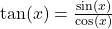 and the quotient rule to show that the derivative of
  is
is  .
.
Calculate the derivative with respect to for each of the following four composite functions. Clearly identify the inner and outer operations before using the chain rule.




Calculate the derivative with respect to for each of the following three triple composite functions. You will need to apply the chain rule twice sequentially, working from the outermost layer to the innermost core layer.



Calculate the derivative with respect to for each of the following three functions. Each problem requires you to nest the chain rule inside a product or quotient rule framework.


